Digital Brain for Business: Personal Productivity or the Whole Company?
By Dimitris Goudis | 2026-05-23 | 12 min
Digital Brain for Business: Personal Productivity or the Whole Company?
Someone asked me this in a working session last week: "Is a digital brain meant to manage my personal productivity as a founder, or is it supposed to be the digital brain of the entire business?" Fair question. But it's the wrong one to ask first. I've watched it stall people before they build anything.
TL;DR: A digital brain is both. It starts as personal productivity — your frameworks and thinking, captured so AI uses your full context every session — and becomes the business's brain when your team, your clients, and your AI agents run on that same thinking. The split isn't real. The thing that matters is that you own it.
A digital brain for business is a structured knowledge base — usually a knowledge graph — that holds how you actually think and decide, so that people and AI agents can act on it without you in the room. A note app stores what you wrote. A digital brain runs your work.
The 80% that never made it out of your head
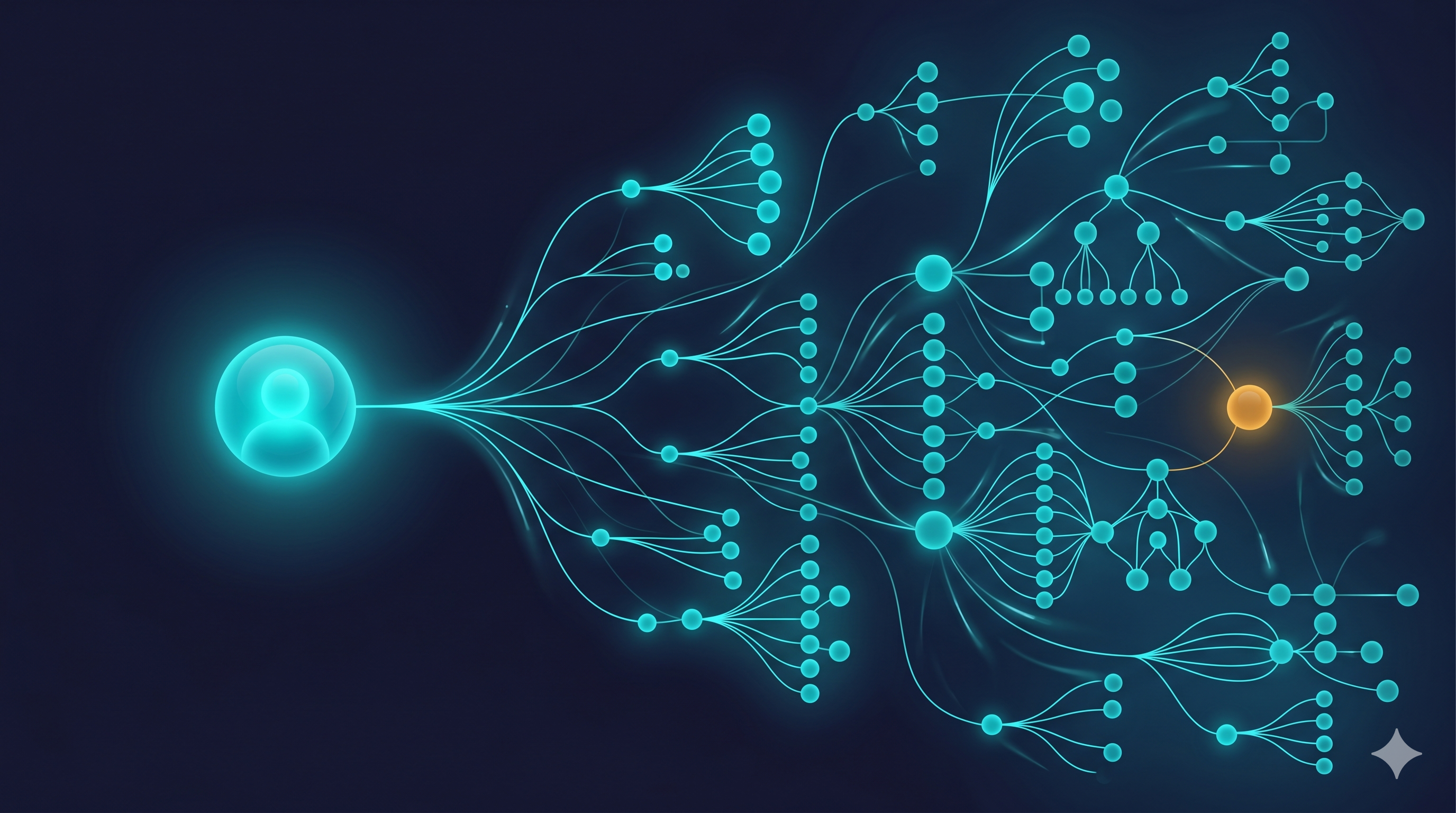
Look at the shape of knowledge work. Brian Madden, a futurist at Citrix, put a number on it I keep coming back to: roughly 20% of knowledge work is visible, 80% is invisible.
"A second brain reaches the previously untapped 80%. For the first time, the actual knowledge part of knowledge work can be digital too." — Brian Madden, VP & Futurist at Citrix
The visible 20% is email, documents, scheduling, admin. We digitized that decades ago. The invisible 80% is the part that matters — the strategy, the judgment calls, the reason you price one project differently from another.
For a founder or a consultant, that 80% is the whole thing you sell. It's your way of thinking, and most of it has never been written down anywhere. There was never a good place to put it.
What most people try
People reach for a second-brain tool, and there are good ones. I'll be upfront about how I judge them: I care about the workflow, not the stack.
- Obsidian — local-first Markdown, 1,500+ plugins. The privacy champion, strong for a personal vault.
- Logseq — open-source, outline-based, own your files.
- Reflect and Mem — fast journaling and AI-native auto-organizing.
- Notion and Notion AI — flexible docs and a generic assistant on top.
- Tana, Anytype, Buildin — object/graph models, with Buildin leaning toward team and on-premise use.
All of them capture your thinking. Then it sits there. They store notes well; nothing acts on them. So the day a client messages you at 9pm, or a contractor runs a call without you, the notes can't answer in your place. You still have to.
Why it stops at "personal"
The personal version breaks the second your thinking has to leave your head. A note app can't run your framework. So you stay the bottleneck, and every answer still has to come from you.
That's also where the "for the business" version usually goes wrong in the other direction — people imagine it needs an enterprise platform. It doesn't. The same principle scales down.
What "the business's brain" actually means at scale
At the far end, "digital brain" means something huge. The o9 Solutions Digital Brain Platform unifies data and execution across a whole enterprise on a loop — Sense, Model, Simulate, Decide, Execute, Learn — for demand, supply chain, revenue, and finance.
Impressive, and completely the wrong target for a founder or a small team. But the useful part is this: the personal end and the enterprise end are turning into the same thing. The core idea doesn't change whether you're one person or ten thousand. You capture the thinking that's stuck in people's heads and let software act on it.
The way I picture it: the graph becomes a mental model of the business. Once your thinking lives in a structured brain, scaling it isn't a second project. You just point more things at the same brain — a teammate, a bot that talks to clients, an automation you set up once.
The BrainGraph approach: one brain, and you own it
This is the part I'm stubborn about. The founder owns the brain. The consultant builds it. You run it after I leave, and if you can't, I didn't do my job.
I say it that way on purpose. Too many consultants build something only they understand, then bill you forever to keep it alive. I'd rather hand you a brain you can change yourself. Once you own it, the personal-vs-business question stops mattering. It's one brain. You use it in the morning; the business uses it the rest of the day.
With BrainGraph that's three moves on one brain, and none of them is "rip out your stack":
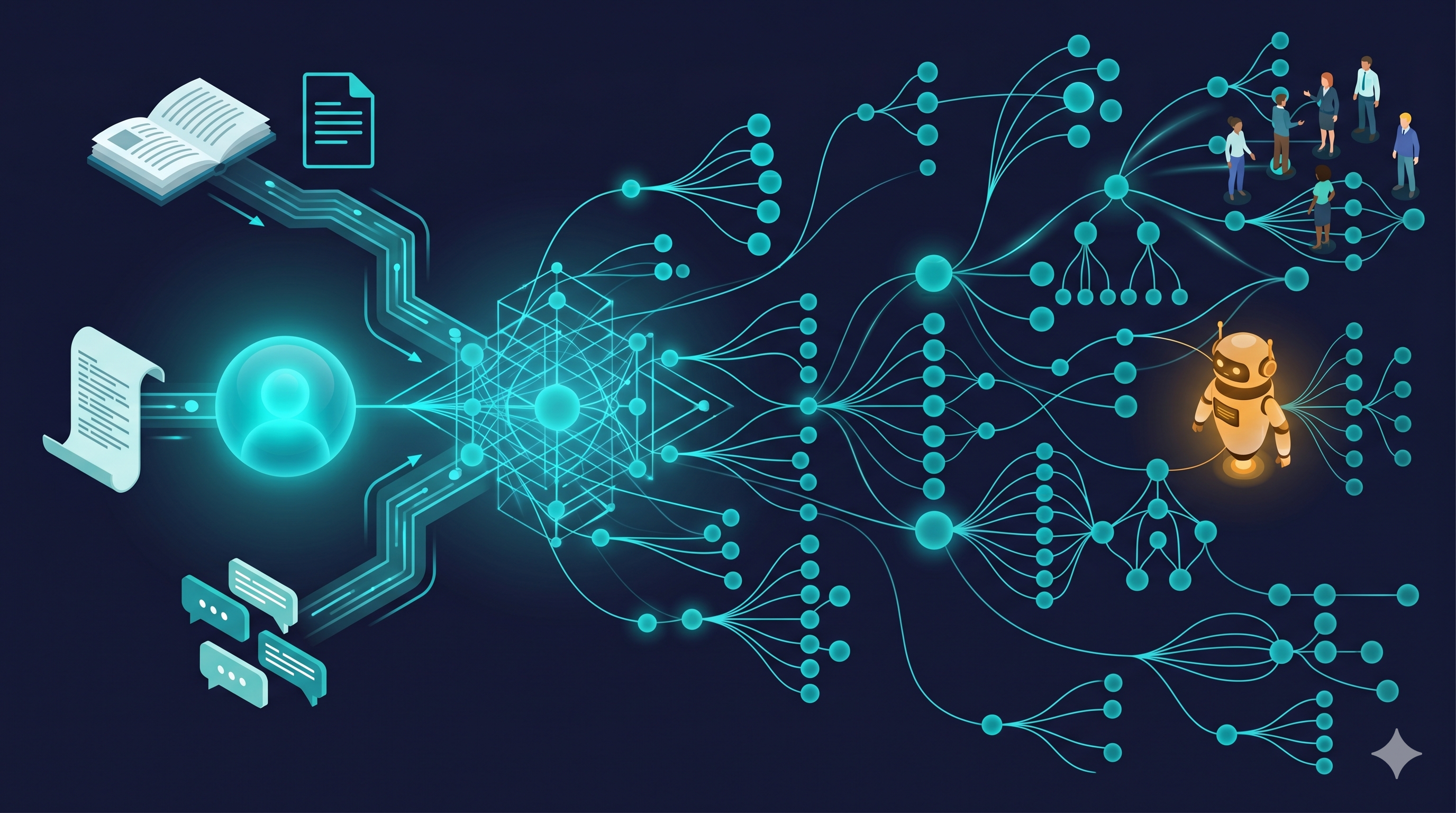
- Feed it the way you already work. Paste a messy transcript or a document into OpenClaw and it goes into the brain. No retyping.
- Stop re-explaining yourself to AI. Inside Claude Code, your context loads with one paste instead of rebuilding it every session. That's the personal-productivity win.
- Let the business run on it. Wire the brain into Zapier and an agent qualifies a lead, answers a client, or runs an intake using your judgment — while you're not in the room.
!A central digital brain receiving transcripts and documents and feeding a team and an AI agent.
That third move is where a personal tool turns into the business's brain. Before you let an agent loose, two things have to be right. It needs to know what it's allowed to say and where to stop — that's a soul-files and guardrails question I covered here. And it can't run a framework that only lives in your head, so you package it: methodology into an SOP, SOP into a skill file the agent can actually follow.
Second brain vs digital brain
The difference I keep explaining to people: a second brain is storage. A digital brain for business does something with what's stored.
| Criterion | Personal second brain (Obsidian, Mem, Reflect) | Generic AI assistant (Notion AI) | BrainGraph digital brain |
|---|---|---|---|
| Core job | Store and retrieve your notes | Summarize and draft inside your docs | Hold your thinking as a graph agents act on |
| Whose knowledge | Yours, as notes | Generic model + your docs | Yours — frameworks, positions, client logic |
| Acts on your work? | No — you read it | Drafts on request | Yes — runs agents (qualify, prep, audit) |
| Scales to the business? | Personal only | Team docs | One brain → team, clients, agents |
| Who owns and runs it | You | The platform | You — built to run after the consultant leaves |
Mini case study — Boy Hijnen's Client Yield → Sentinel
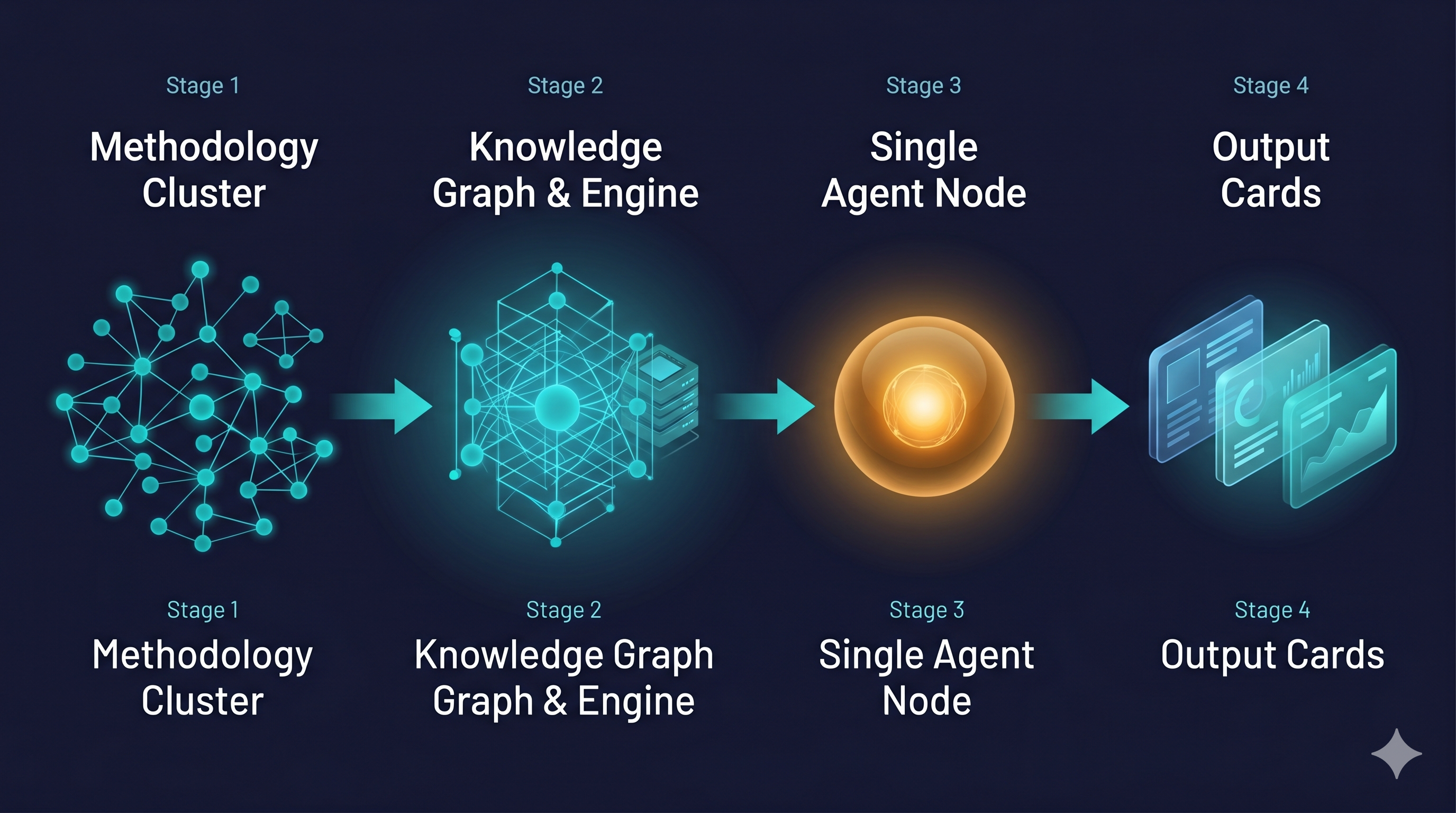
Boy Hijnen, a Dutch revenue consultant, had a methodology he called Client Yield: 127 metrics that roll into 13 drivers and 3 outcomes — expansion, retention, referral. For years it lived in his head and his spreadsheets.
Over a roughly three-month build we turned it into Sentinel. The methodology became a knowledge graph. A deterministic engine runs the 127 formulas so the math never drifts. Claude maps a client's messy CSVs in, then interprets the results back out against the graph.
Feed it a B2B company's billing, CRM, and usage data and it returns client-by-client recommendations with talk tracks. In one demo it read a 150-client book and surfaced roughly $70K of expansion opportunities in about 90 seconds. That's a personal brain — one consultant's thinking — running at the scale of a whole client base. Boy owns it; his firm now runs it as a service.
The honest caveat: real power, real risk
I think AI is overhyped, and most "AI for your business" pitches are admin with better marketing — a notetaker that files a summary nobody reads hasn't touched the 80%. One client put it well: AI is a sword of Damocles, opportunity on one side and danger on the other.
Madden names the danger as governance. Personal AI now connects to corporate apps, reads screens, and transcribes meetings.
"From this day forward, you must assume everything any worker hears in a conversation, sees on a shared screen, or reads in a Slack channel will end up woven into their personal knowledge base within seconds." — Brian Madden, VP & Futurist at Citrix
His honest conclusion is that nobody is really governing this yet. A big company solves that with infrastructure. For the founders and consultants I work with, it comes back to ownership. If you know what's in your brain, what it's connected to, and what your agents are allowed to do, you've already handled the small version of the problem. The risk isn't having a brain. It's having one you don't understand.
How to start
- Capture one framework, not your whole life. Pick the methodology you repeat most and put it in a brain you own — not a tool you'll have to escape later.
- Wire it into where you already work. Ingest a few real transcripts and docs through OpenClaw, then load that context in Claude Code so every session starts with your full thinking.
- Point one agent at it. Use Zapier to run a single job end to end — a lead qualifier or a client FAQ — with guardrails set first. Prove the loop, then add more.
What this gets you
You stop being the bottleneck. The thinking you've spent years building finally does work outside your head — in your calls, in your team's hands, in an agent that answers the way you would. Start personal, but build it so it can grow. Do that and there's no migration day later. You just keep connecting more to the same brain.
Frequently Asked Questions
Is a digital brain for personal productivity or for the whole business?
Both. It improves a founder's personal productivity by giving AI your full context every session, and it becomes the business's central knowledge base when teammates, clients, and agents run on that same thinking. It starts personal and scales when you connect more to it.
What is the difference between a second brain and a digital brain for business?
A second brain stores your notes so you can retrieve them. A digital brain for business is a structured knowledge graph that agents and people can act on — running tasks like lead qualification or client answers using your judgment, not just holding text.
How does a personal digital brain scale to a whole company without rebuilding it?
You don't rebuild it. Once your thinking lives in a structured brain, scaling means pointing more things at the same brain — a teammate, a client-facing bot, an automated Zapier workflow. The graph becomes the business's mental model.
Do I need to know how to code to build one?
No. Boy Hijnen is a revenue consultant, not a developer. The work is mapping your methodology and wiring it into tools like Claude Code and Zapier — which is exactly what a build sprint with me handles, with you owning the result.
How is BrainGraph different from Notion AI or a tool like Mem?
Notion AI and second-brain apps like Mem summarize or store your content. BrainGraph holds your thinking as a knowledge graph that agents act on, and it's built so you own and run it — including the automated workflows, not just a chat box.
Who owns the digital brain after it's built?
You do. The whole approach rejects the consultant-as-permanent-dependency model — the brain is a system you can run, understand, and evolve after the build is done.
Start today
See how a brain like this gets built — and built so you can run it yourself afterward — in the weekly masterclass.
Prefer to talk through your own setup? Book a 30-min conversation with me.
Sources
- Brian Madden, "Workers' second brains break every assumption about how we secure knowledge work," Citrix Blogs, Feb 11, 2026.
- o9 Solutions — The o9 Digital Brain Platform.
- Boy Hijnen / Vantum Group — Client Yield → Sentinel (office-hours demo, vantum.group).